
Pollen Robotics Opens $399 Microduck Preorders for AI Builders
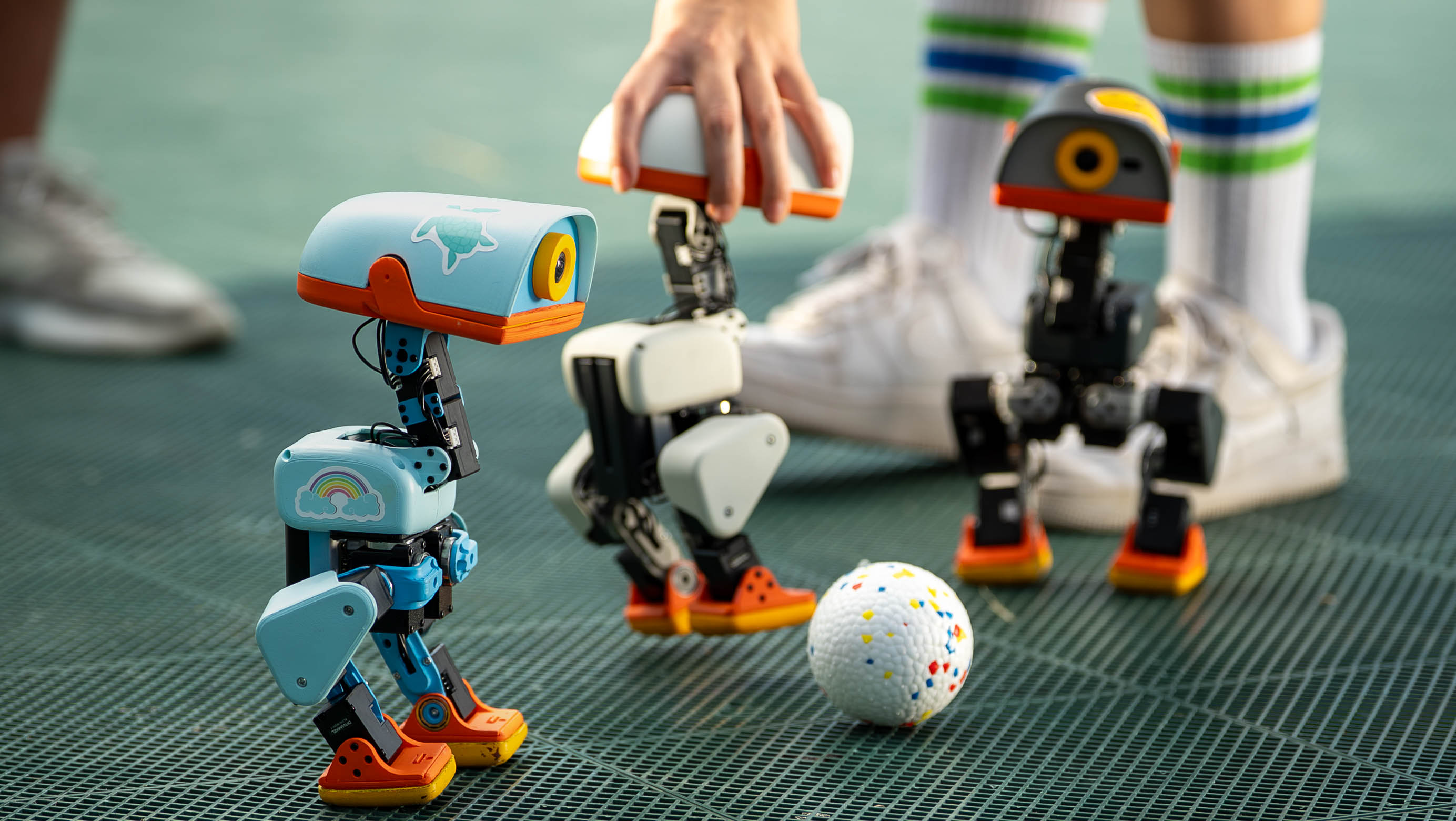
Pollen Robotics, Hugging Face's robotics team, has opened preorders for Microduck, a 25 cm biped robot designed around an open software stack for control, simulation, reinforcement learning and sim-to-real deployment.
Microduck is a small robot aimed at making physical AI more accessible
Pollen Robotics announced Microduck on August 27, 2026 and opened preorders at an introductory price of $399 before taxes and shipping. Pollen is the Bordeaux-based robotics team that joined Hugging Face in 2025, and Microduck is its second consumer robot after Reachy Mini.
The important status distinction is that preorders are open now, but the hardware is not shipping yet. Pollen says first deliveries are targeted before Christmas 2026 in North America, Europe and the UK. Several hardware details are also still provisional, including final camera specifications, LiDAR range, radio versions, SDK languages and age recommendations.
What the robot includes
Microduck is about 25 cm tall, weighs under 800 grams, and uses 15 degrees of freedom across its legs, head and neck. Its sensing package includes a front camera, a compact 8x8 time-of-flight LiDAR matrix and two IMUs. It also has microphones, a speaker, Wi-Fi, Bluetooth and two NFC antennas.
An articulated beak gives the robot a simple grasping mechanism. Pollen says the robot can walk, sit, crouch, roller-skate, pick up objects with its beak and recover from many common fall positions. Seven trained moves are planned in the box, with an onboard policy loop running at 50 Hz.
The compute platform is listed as a Rockchip RK3566 with an AI accelerator, 1 GB of RAM and 32 GB of storage. Power comes from a removable NP-F550 battery, with Pollen estimating around one hour of runtime depending on use.
The more interesting part is the software workflow
Microduck is positioned less as a closed toy and more as a compact physical-AI development platform. Pollen's stack covers robot control, virtual training environments, reinforcement-learning scripts and a tested sim-to-real workflow. The intended loop is to train a behavior in simulation, deploy it to the physical robot, observe the gap between simulation and reality, refine the environment or policy and publish the result.
That workflow matters because robotics research is increasingly moving toward policies trained in simulation and transferred to real hardware. A relatively inexpensive robot with a reproducible simulation and RL toolchain could lower the barrier for students, independent developers and research groups that cannot justify larger humanoid platforms.
Pollen's public materials say the software stack is open source and the project repository covers the SDK, simulation and reinforcement-learning tooling. However, the company explicitly warns against describing Microduck as open-source hardware: the mechanical and electronic design files are not part of the open-source release.
Pollen also says the software stack will be released before the first robots ship, so developers can begin experimenting with the simulation and training workflow ahead of receiving hardware.
Why this development matters
The physical-AI ecosystem has many impressive humanoid demonstrations, but hardware cost and restricted software stacks often make hands-on experimentation difficult. Microduck is interesting because it combines an accessible consumer-scale robot with reinforcement learning, simulation and sim-to-real deployment rather than limiting users to canned motions.
It also reflects Hugging Face's broader expansion from model hosting and software into open robotics infrastructure through Pollen Robotics. The robot is not a frontier humanoid and the announcement does not claim general-purpose autonomy. Its value is instead as an approachable platform for learning, prototyping and sharing embodied-AI behaviors.
Availability and caveats
Preorders opened on August 27, 2026 at $399 before taxes and shipping. First deliveries are targeted before Christmas 2026, which is a plan rather than a completed shipment milestone. Pollen's press kit labels several specifications as not final.
The correct status is therefore: Microduck has been announced and can be preordered, its open software ecosystem is being released for developers, but production hardware deliveries are still upcoming and some specifications remain provisional.
This article is built from the source material below. Open the originals for full context and the latest updates.
