
Overview
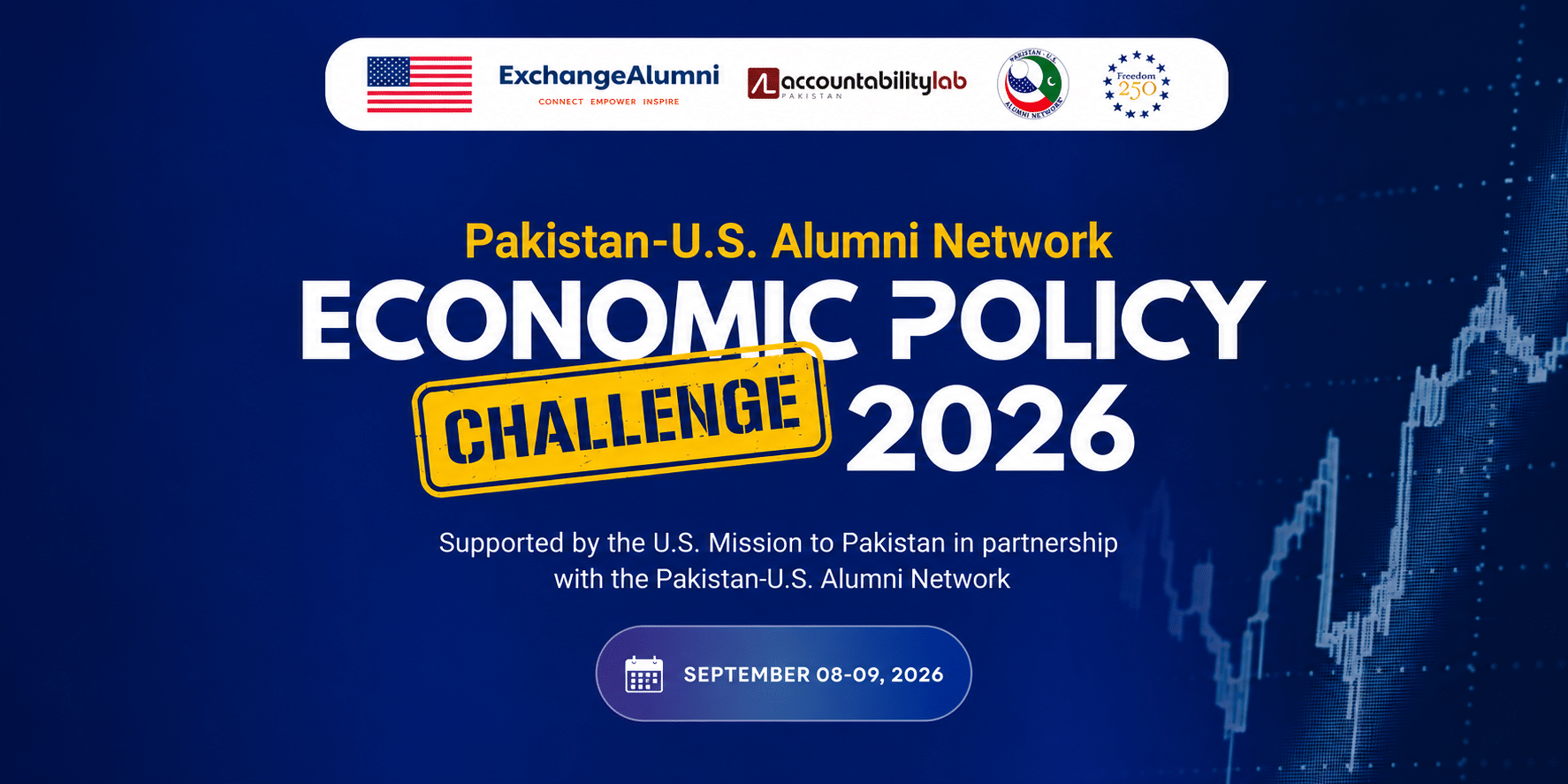
The Pakistan-U.S. Alumni Network (PUAN) Economic Policy Challenge 2026 brought together U.S. government exchange alumni from across Pakistan and South Asia for two days of intensive policy discussions, collaboration, and solution development in Islamabad. Supported by the U.S. Mission to Pakistan and implemented in partnership with Accountability Lab Pakistan, the Challenge engaged 65 Pakistani alumni from 14 PUAN chapters, alongside six international participants from Sri Lanka, Maldives, Nepal, and Bangladesh. The initiative provided an opportunity for alumni to apply knowledge, professional expertise, and problem-solving approaches gained through their U.S. exchange experiences to Pakistan’s economic priorities.
Complete competition details
Full Job Description
The Pakistan-U.S. Alumni Network (PUAN) Economic Policy Challenge 2026 brought together U.S. government exchange alumni from across Pakistan and South Asia for two days of intensive policy discussions, collaboration, and solution development in Islamabad.
Supported by the U.S. Mission to Pakistan and implemented in partnership with Accountability Lab Pakistan, the Challenge engaged 65 Pakistani alumni from 14 PUAN chapters, alongside six international participants from Sri Lanka, Maldives, Nepal, and Bangladesh. The initiative provided an opportunity for alumni to apply knowledge, professional expertise, and problem-solving approaches gained through their U.S. exchange experiences to Pakistan’s economic priorities.
From Economic Challenges To Policy Solutions
The Challenge brought participants together in ten teams to address key economic policy areas, including foreign investment, trade and export competitiveness, taxation, energy security, artificial intelligence and technology, institutional reform, capital allocation, Pakistan’s global brand, long-term economic planning, and investor confidence.
Opening the Challenge, Heidi Smith, Director of Public Engagement at the U.S. Embassy Islamabad, encouraged participants to look beyond the symptoms of economic challenges, identify underlying constraints, and develop practical solutions. Jay Kim, Senior Trade and Investment Officer at the U.S. Embassy, highlighted the importance of economic policy choices and opportunities for stronger U.S.–Pakistan trade and investment engagement.
On Day 1, teams worked through a structured policy-development process, identifying economic constraints, evaluating policy options, and outlining implementation strategies. The discussions drew on participants’ professional experience and lessons from U.S. institutions, encouraging practical approaches to innovation, economic competitiveness, and institutional performance.
Turning Ideas Into Actionable Roadmaps
On Day 2, the ten teams presented their proposed policy solutions before a jury, outlining key challenges, recommended interventions, and potential implementation pathways. The presentations demonstrated how U.S. exchange learning and multidisciplinary expertise could be applied to develop evidence-informed recommendations relevant to Pakistan’s economic landscape.
The Challenge concluded with an awards and recognition ceremony, acknowledging teams for their policy analysis, collaboration, and proposed solutions.
U.S. Chargé d’Affaires, ad interim Andy Halus addressed the closing ceremony, recognizing the alumni’s contributions to economic policy discussions. Federal Minister and Chairman of the Board of Investment Qaiser Ahmed Sheikh also participated, underscoring the relevance of policy ideas that support Pakistan’s investment priorities and economic competitiveness.
Advancing Economic Opportunity Through U.s. Exchange Learning
The PUAN Economic Policy Challenge demonstrated the value of bringing U.S. exchange alumni together to apply their international learning, professional networks, and analytical skills to real-world economic questions.
Across two days, participants progressed from identifying structural challenges to developing ten policy presentations and proposed roadmaps, reflecting their collective expertise and commitment to practical problem-solving.
As the United States commemorates 250 years of American independence, the initiative also highlighted the continued relevance of American innovation, professional excellence, and exchange learning in supporting economic opportunity and stronger U.S.–Pakistan commercial engagement.
Through initiatives such as the Economic Policy Challenge, PUAN continues to connect alumni expertise with opportunities to contribute to Pakistan’s economic future.
Watch the highlights of the PUAN Economic Policy Challenge 2026, featuring key moments from the discussions, team collaborations, policy presentations, and closing ceremony.
Tips for this competition
Practical JobOpportunity guidance. These tips do not replace official rules or create new eligibility requirements.
- Study the scoring criteria and previous winners before deciding what evidence, prototype, essay, research or portfolio will best support the entry.
- Confirm country, age, team, education and organization restrictions and whether one person may enter multiple submissions.
- Follow the required file format, word/time limits and naming rules exactly; technical non-compliance can disqualify a strong entry.
- Keep proof of submission and submit before the deadline rather than relying on the final hour.
JobOpportunity.info helps you discover and organize source listings. Confirm eligibility, dates, salary/funding and application instructions on the original source before submitting anything.
Apply through JobOpportunity →Browse current JobOpportunity listings from Puan Pk Opportunities →
